(Header image by Michael Afonso on Unsplash)
“I have made this letter longer than usual because I lack the time to make it shorter.”
– Blaise Pascal
I think about this quote often. So often, in fact, that this isn’t even the first time I have used it to open a blog post. Brevity is difficult in both prose and RPGs. One-shots present a unique challenge of requiring set up, exposition, dramatic conflict, and a satisfying resolutions all within 3-4 hours.
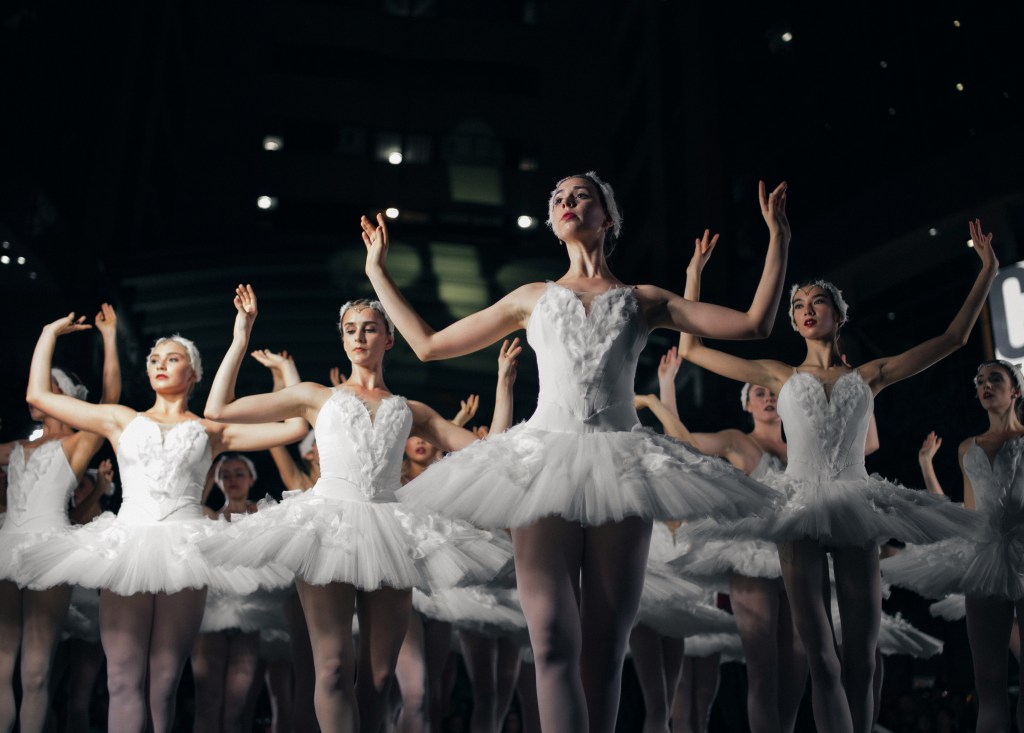
I ran around 30 one-shots this year, often with complete strangers, and they all wrapped up within the advertised window. My (not so secret) one-shot system got me through all of them. One shots are The Nutcracker ballet.1
Set the Stage
Average time: 30 minutes
It may feel like you need to jump right into the game play since you have limited time, but taking time at the beginning of the game to set ground rules and expectations for the game then establish player connections is an investment in the game. It will pay dividends.
Early this year I was introduced to the CATS system from P. R. O’Leary and it was a game changer. It stands for Concept, Aim, Tone, and Safety, and is meant to be a discussion to determine as a group what the game should feel like. While I still use safety tools like lines and veils, CATS focuses the conversation on what we want to see in the game instead of a list of what we don’t want.2
Over time, I have shortened the conversation to two core questions based on tone and safety: “What type of story do we want to tell tonight” and “What do we want to avoid?” This does wonders for keeping the players on track, they have a theme to attach themselves no matter what else is going on. You want as many handholds as possible when you have so little time for exposition.
In that same vein, we need to establish character relationships. This is a borrowed concept from when I did improv.3 If you want roleplay to happen in your game, the characters need to know who they are to each other, and you don’t have time to let them figure it out “naturally.” I have everyone introduce who they are playing, then ask each player one question about their character and how it connects them to another PC. For example:
- You were betrayed by another character. Who was it and why do you still stand by them?
- Another character owes you money. How much and how often do you try to collect?
- You and another character were childhood friends. Describe an early adventure that changed your lives forever.
- You have matching tattoos with another character. What is it and why do you share it?
You get the point. Many games even include these questions in their character creation.4 You might feel like this takes too much time, more than once I have had this process eat up the first hour of a game. That’s close to a third of the total play time! It’s okay, because this is part of playing the game. Everyone is painting the shared history leading up to the day’s main event. This process is roleplaying! Together you create the potential for the rest of the game.
Act 1 – Establish conflict
Average time: 1 hour
This is where the game starts. Whether you start in a cavern or in the middle of a cloud castle being chased by bean-eating trolls, give your players a hook as quickly as possible. They want to take big swings with these newly fleshed-out characters, but they can’t until they know what direction the adventure is in.
Even for narrative games where player choice and die results will massively shift the direction of the game, you have to give them something to run towards (or away from) even if they don’t ultimately make it there.
My biggest advice for this section is to CUT CUT CUT! You want to have a solid beginning and a fiery conclusion, everything in the middle is expendable. I find that 1-2 page adventures are more than enough to fill out a session. If your “one-shot” has 16 or more pages, you need to cut most of that out.
For adventures made on the fly, you want to skip to the good bits. Don’t roleplay the scene walking to the library to talk with the corrupt public servant: smash cut into their office, mid-conversation. Start as close to the action as possible in every scene.
Intermission
Take a short break halfway through the session. This is important for obvious biological reasons, but is your opportunity for course correction. Determine a path to get get to a final scene as quickly as possible and cut out the rest. Check-in with your players about the tone and direction of the game like a mini-stars and wishes, and get back into the action.
Act 2 – Race to the End
Average time: 1 hour 30 minutes
Get to a final scene as quickly as possible, then let that scene breath. Everything until now has been leading up to this, cash in on that work. Stay focused and listen to your players, throw consequences of their earlier choices back at them, draw on every shred of your experience and leave it all on the table. Work with your players to find a satisfying conclusion to the session. You can do this.
Exit the theater
Average time: 20 minutes
Write an epilogue together. I like to ask questions about the broader world and about players specifically. How have things changed long-term because of the choices players made. I have found that epilogues can go a long way to smoothing over even the roughest one-shots.
Use any remaining time as a release valve. Lots of people enjoy stars and wishes, I trend towards unstructured chatter about what everyone enjoyed from the game, try and focus on the positives.
Say goodnight to everyone, and close your eyes, and breath. You did it. Congratulations.
Acknowledgements and disclaimer
None of the information here is new or original, but I do hope the structure can help others out on their journey. I benefited from hundreds of hours of free videos from Matt Colville’s Running the Game and the Dimension 20 Adventuring Academy before I ever ran my first game, then I have been learning from the thoughts of dozens of other creators, writers, and designers since.
A special thanks to Gemelli, a master GM who introduced me to the CATS system, the idea of checking in with players mid-game on tone and direction, and asking broader epilogue questions. Truthfully he should be writing this and not me.
I want to add a final disclaimer that this guide is written from a perspective of someone who mainly plays action and adventure style games. While I think the concepts are still helpful, they don’t all translate 1-1 to all games. If I were playing a slice of life game, I would be unconcerned with generating a “story arc” or trying to get to a final scene. I would focus on just fully realizing any scenes that arise. Your mileage may vary.
- Or any two act structure. I just saw the ballet last week and it was a delight. Duke Ellington did an arrangement that I absolutely adore. ↩︎
- My safety tool discussions are also very much colored by Jay Dragon’s Palette Grid system. I have never used it in full for a one shot, but the idea guides our expectations conversation. ↩︎
- Here is a great blog post by Steve Roe on the importance of establishing relationships in improv. There is also a great fan club video on the Quinns Quest patreon that inspired me here. He uses a metaphor that these relationships turn your character into a glittering diamond that changes as you view it from different angles, which really stuck with me. ↩︎
- See Wanderhome by Jay Dragon, Spire by Grant Howitt and Christopher Taylor, Songbirds by Snow, and I am sure tons of other games. All my favorite designers do this, go figure. ↩︎

 Birdmilk's RPG Cafe
Leave a comment