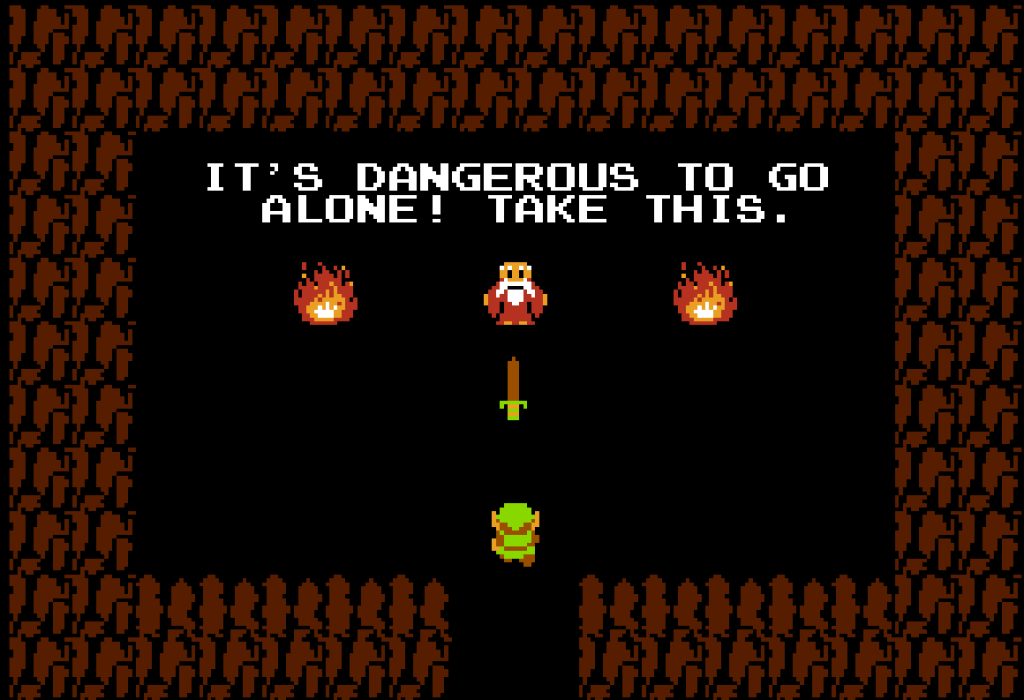
“The conversation that you have with the other players and with the rules create a story that couldn’t have existed in your head alone.”
– Avery Alder, Monsterhearts 2
I think the reason many of us cling to dice in RPGs is so we can ensure the story is fluid, that there are twist and turns that no one at the table could have predicted. That the story spills out of our minds an onto the table. The added randomness guarantees that we have to step outside our own comfort zone and view the game we are playing as a flexible and ever changing. Nothing is set in stone.
But dice can be cruel. Probability is uncaring and uninterested in telling a good story. Sometimes fate turns in our favor and allows for something deeply interesting, a narrow success or a crushing death. But sometimes the dice leave us scratching our heads, the hero fumbles awkwardly, the once tense combat drags too long, or the story just falls flat.
What if we just took out the dice?
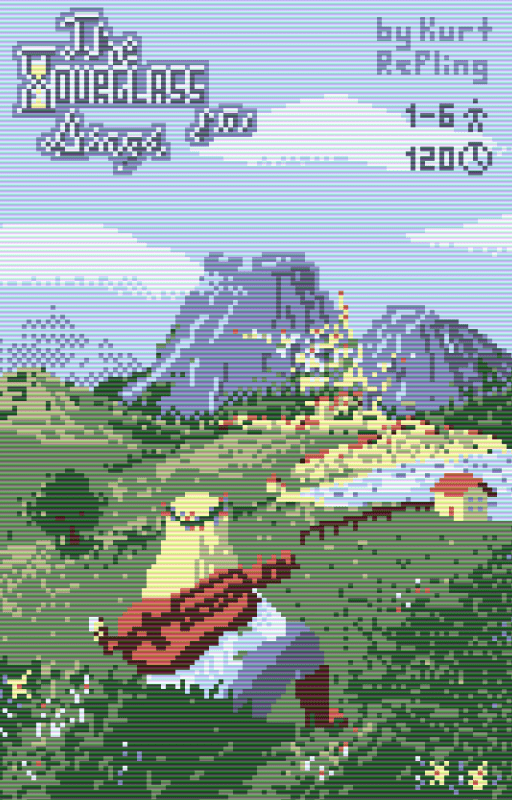
(Cover art by Kurt Refling)
Collective difference as dice
The Hourglass Sings is a prompt based game, which I am on record as saying is the best type of game for introducing new players to the rpg hobby at large. The game is also written by A Smouldering Lighthouse, the duo behind Big Dog, Big Volcano, which won the “Easiest to Recommend” Milk Award last year. Unsurprisingly, I am obsessed.
The game itself is a love letter to Majora’s Mask. As a group you take on the roles of the Town, the Dark, and the Hero, trading off scenes that explore the relationships in the Town, the villainy at the heart of the Dark, and the challenges the Hero must overcome.1 But the Hero cannot win in one fell swoop. No. Periodically the story is reset through the Hero’s mystical musical instrument after they have gained some important insight or suffered a grand defeat. Now that’s Majora’s Mask.
Mechanically the game is simple. Each turn a player draws a card then describes or plays out a scene based on the relevant prompt. The prompts are relatively vague in nature:
- Describe a personal moment: A hot meal.
- Describe a place in town: A means of escape.
- Describe the advancing darkness: A great collapse.
- Describe how the Hero fights the Dark: A plan comes to fruition.
With these small limitations and gentle nudges, the game facilitates expansive stories. I played with the designer and three friends and we spun a tale of a town in ruins, sibling rivalry turned treacherous, and a hero who had fought against the darkness and failed in their own time, then was recalled as a spirit to save the village from being torn apart hundreds of years later.
The game we played was not The Legend of Zelda. But it felt like The Legend of Zelda. There was no dungeon crawling, or sword fighting, or horse racing, which ostensibly makes up most of the actual video game play. But that isn’t necessarily what I remember from my childhood. I remember the interesting towns and talking with the eccentric inhabitants, I remember the dread of the impending moon, I remember the frustration of having to start all over after having made it so far. Those are the feelings The Hourglass Sings encapsulates, and it does it in 2 hours or less. That is raw, powerful efficiency.
I think the beauty of this prompt based system is that you will never have a wasted turn. Each player is either laying groundwork for a future payoff, pushing the story forward, or taking a swing that makes the rest of the group gasp in awe. The unexpected twists are not generated by a set of dice, but by the differences in perspective, experience, and focus brought by each person at the table. The story is built through collective contrast into a brilliant, gleaming gemstone.
Recommendation
This is the type of game that leaves you quietly contemplating at your table long after your friends have left. Despite its slim 31 page count, it punches well above its weight. A small voice in the back of my head wants to suggest this as a palate cleanser between larger campaigns or to have on hand for those sessions when not everyone can make it, but it deserves more than that. This is a main event.
I wholeheartedly recommend The Hourglass Sings.
Acknowledgments
The Hourglass Sings can be purchased here.
Thank you to Kurt Refling for designing this great game and creating the beautiful pixel art that nails the old school Zelda aesthetic. Thank you to Kathleen Hartin for editing the book. The two combined as A Smouldering Lighthouse make a wonderful team.
Thank you to Kurt once again for facilitating the game for us, to Tundra for introducing a set of horrifying dolls as the Dark, to Nina for giving us a broken and exhausted Hero to pick up from the dust, and to Sparky for allowing the Hero to heal not just the physical destruction of the Town, but its heart as well. This session was extra fitting as we played just three days after the 40th anniversary of the release of Legend of Zelda in Japan. Exquisite timing.
P.S. I LIKE DICE! I don’t want anyone reading this dice coming out and saying something like “Oh, he’s just a dirty story gamer,” or “He probably doesn’t even know what blorb is.” This is not me staking my flag in diceless only games. I am not even suggesting that everyone is playing RPGs to tell a story! But it is important to me that people understand the magic that prompt based games have to offer, especially in terms of efficiency and beginner friendliness.
P.P.S. I wanted the actual review to be short because the game itself is beautiful in its simplicity and I hoped to mimic that, but let me indulge myself for a moment. I love time magic. Any type of chronomancy has always fascinated me, and I know I am not alone. That said, I am often underwhelmed by time manipulation options in rpgs.
“Oh I get to roll with advantage just like every other ability gives me? So cool. Ooh, an extra d4 on my initiative roll? So powerful.” I think the two big reasons these mechanics miss the fiction so hard is because either they would be way too powerful in a game concerned with balance, or because the idea of a time wizard going backward in time by a week could erase 150 hours of IRL playtime, and that sucks for everyone else.
The Hourglass Sings solves the first issue by being a collaborative game. There is only one hero, so their ability to rewind time cannot be “busted” because all abilities are balanced by the shared desire to tell a good story. The second problem is solved by every prior beat in the game leaving behind an echo. Even if the Hero’s actions are totally different in a second or third cycle, the impacts of the previous cycles are felt and extend through the rest of the story. Progress is never lost.
- The game suggests it can be played with 1-6 people, but I suggest the best player counts are going to be two, four, or five. That way, you will get to inhabit a different perspective every round as the table cycles through the Town, the Dark, and the Hero. ↩︎
 Birdmilk's RPG Cafe
Leave a comment